EXPLORING THE DUCAL PARK: A JOURNEY TO DISCOVER THE TREASURES OF PARMA’S GREEN LUNG
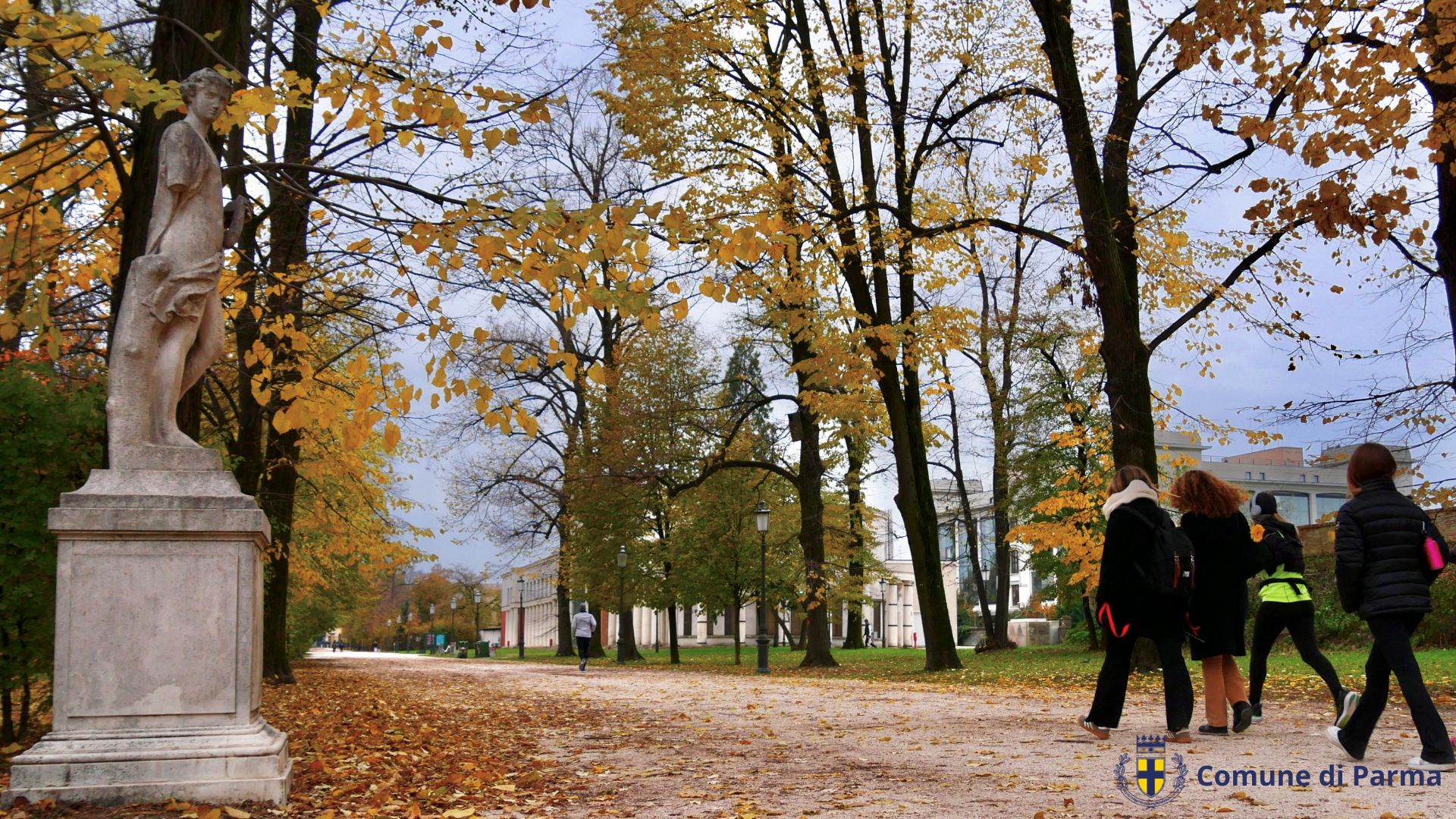
Means: On Foot - Theme: Nature - Municipality: Parma (PR)The city of Parma contains, nestled among its charming ducal alleys, a variety of naturalistic gems that serve both as places of recreation and meeting points for people of all ages, and as veritable history books to be leafed through to discover curiosities and centuries-old secrets. One of these is undoubtedly the Ducal Park, a central green lung that dominates the city with its majesty and its 200,000 square metres of surface area.
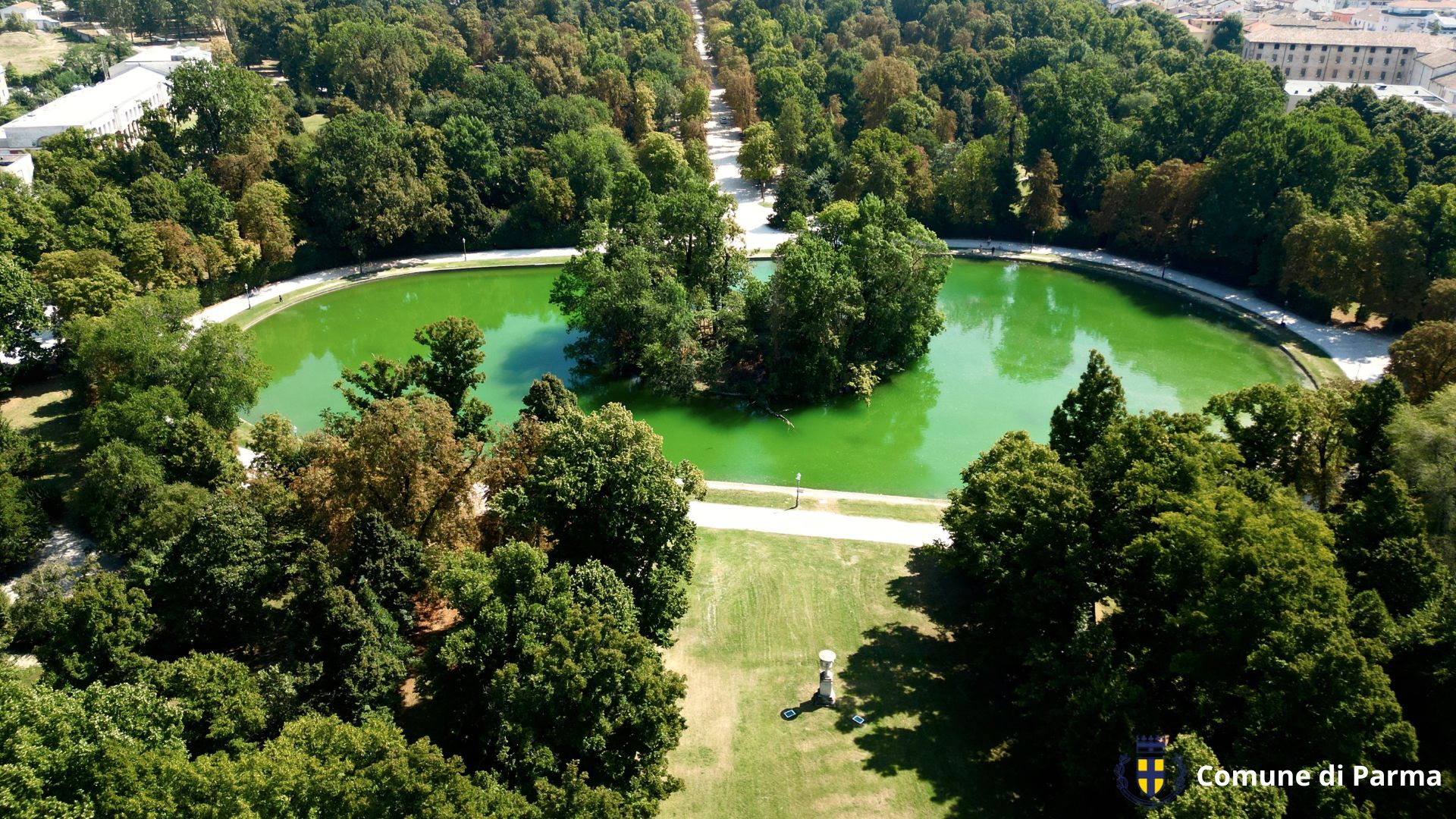
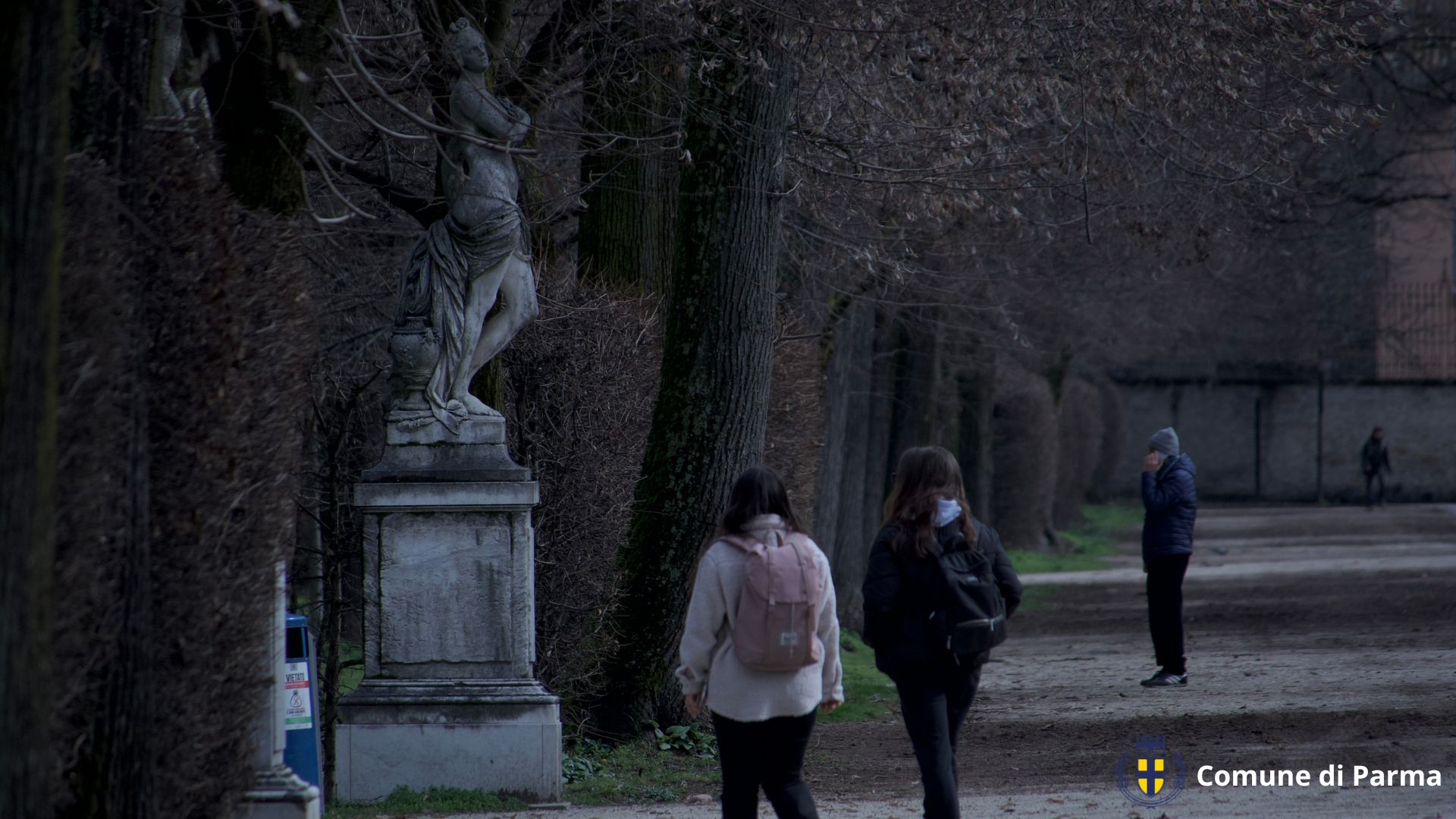
As the story goes, Parma’s Ducal Park, located in the Oltretorrente district, was created in 1561 based on an idea by Duke Ottavio Farnese, lord of Parma, who wanted at all costs to build a large park adjacent to the city’s river. This was when Duke Farnese purchased the surrounding land, within which only the Palazzetto Eucherio Sanvitale was retained. Initially, the park featured a single central avenue, surrounded by flower beds, fountains, hedges, oaks, plane trees and fruit trees. It was not until more than a century later, in 1690, on the occasion of the marriage between Odoardo II Farnese and Dorotea Sofia di Neuburg, that an oval fishpond with an island in the centre was built in the large central avenue of the park, a structure designed to allow nautical shows to be performed. It was during the War of the Austrian Succession that the Ducal Garden saw the peak of a slow decline, which began with the extinction of the Farnese family in Parma in the 1730s: in 1745, all the centuries-old trees were cut down and burned to fuel the fires of the troops engaged in battle. It was only with the new duke, Filippo di Borbone, that, in 1749, the park was completely renovated by Prime Minister Du Tillot based on a design by architect Petitot. Given the transalpine influence, a French-inspired neoclassical garden was created, with monumental statues and vases in Carrara marble based on designs by Petitot himself. After the Restoration, the new Duchess of Parma, Piacenza and Guastalla, Maria Luigia, commissioned the court architect Nicola Bettòli to carry out a partial restoration of the park, introducing new and unusual tree species. After the unification of Italy and the subsequent transfer of ownership of the area to the municipality, the walls were demolished and new entrances were built, finally opening the park to the public, where it remains to this day.
Thanks to the curious centuries-old history that characterises the atmosphere and narrow streets of the Ducal Park, the latter is fortunate enough to contain numerous artistic and architectural artefacts scattered and well hidden in its green streets, all waiting to be discovered, reconstructing through them a magical collage of history that spans more than 400 years. For this reason, this itinerary has been designed within the park to serve as a guide for visitors who, step by step in order of appearance, can admire the various treasures and discover fascinating stories that only the Ducal Park of Parma can preserve.
Main themes: historical, artistic, architectural, naturalistic
Mode: on foot
Duration: 2 h
Indications:
– Type of excursion: one way
– Difficulty: easy
– Length: 2,1 km
– Height difference: 6 m ascent, 3 m descent
Route stages
Start: Étoile (Ducal Park central-east area, Parma).
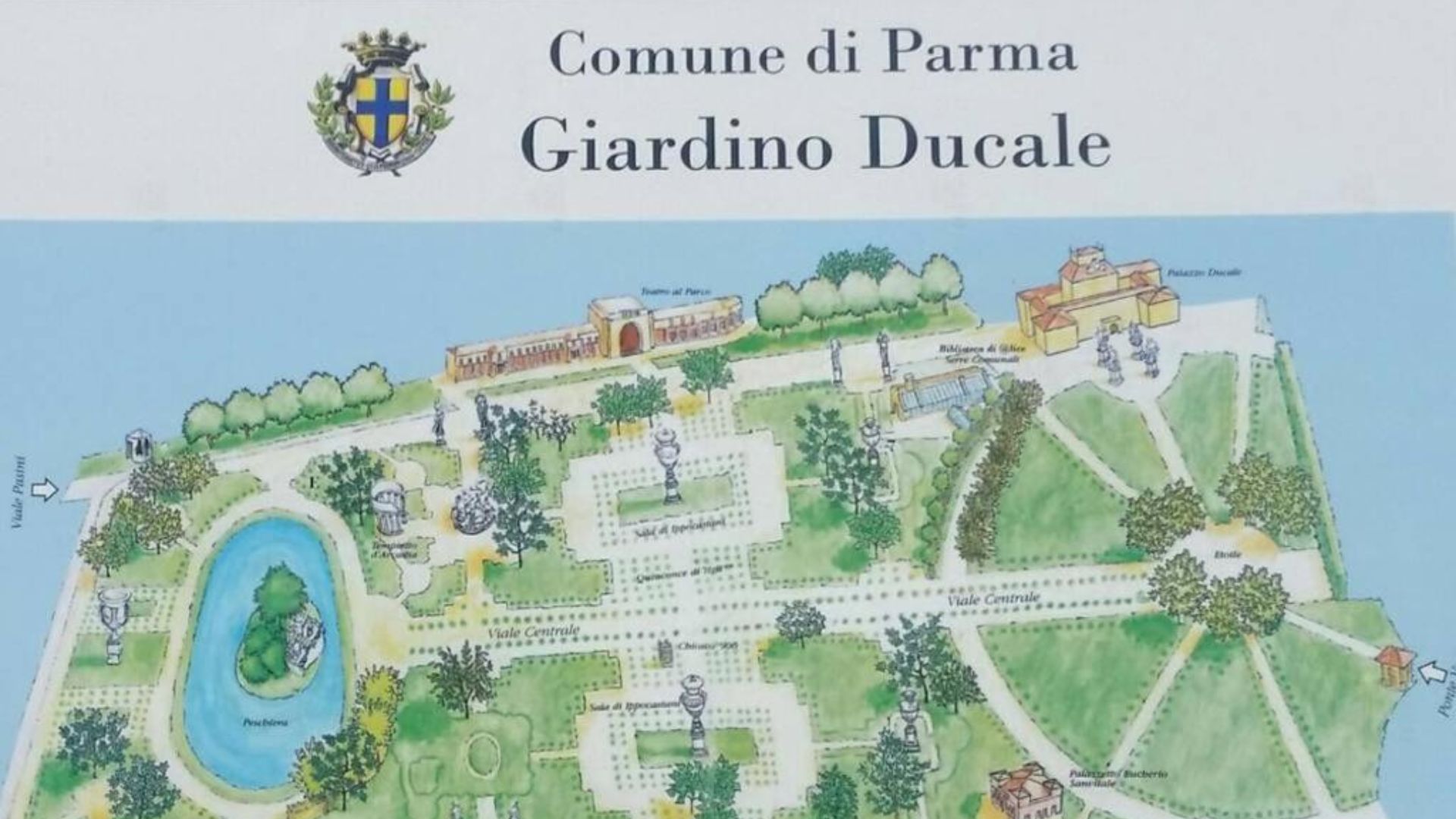
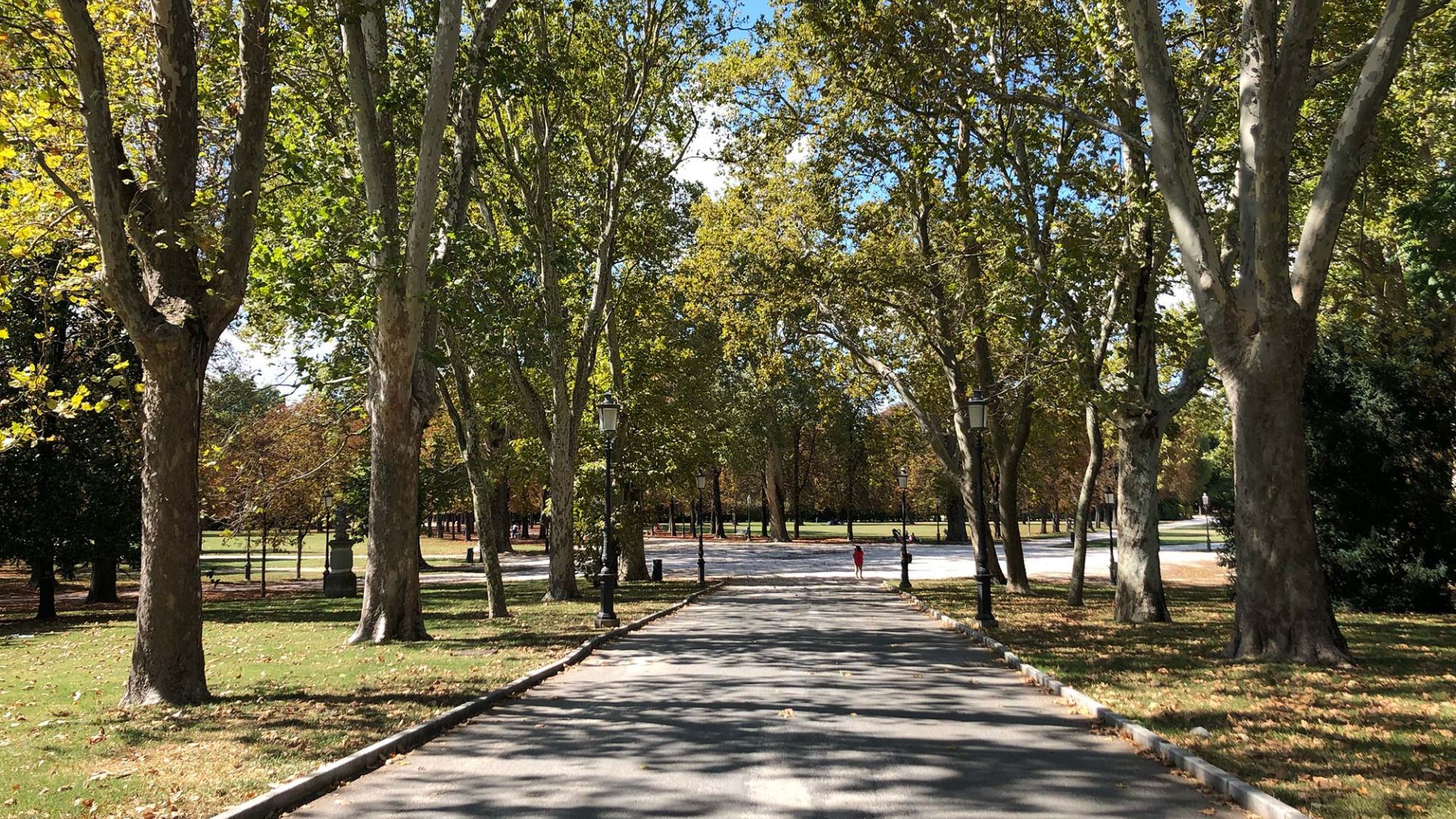
Once you pass through the large gate at the start of the itinerary, near Ponte Verdi, the garden immediately reveals itself in all its monumentality. The starting point is the Étoile, the circular square defined by the largest plane trees in the park, which acts as the true hub of paths and views. It opens out into a fan of seven avenues, six of which are lined with horse chestnut trees and the entrance avenue with plane trees. From here, you can continue the tour by heading north.
Stage 1: Palazzo Ducale (Ducal Park north-east area, Parma).
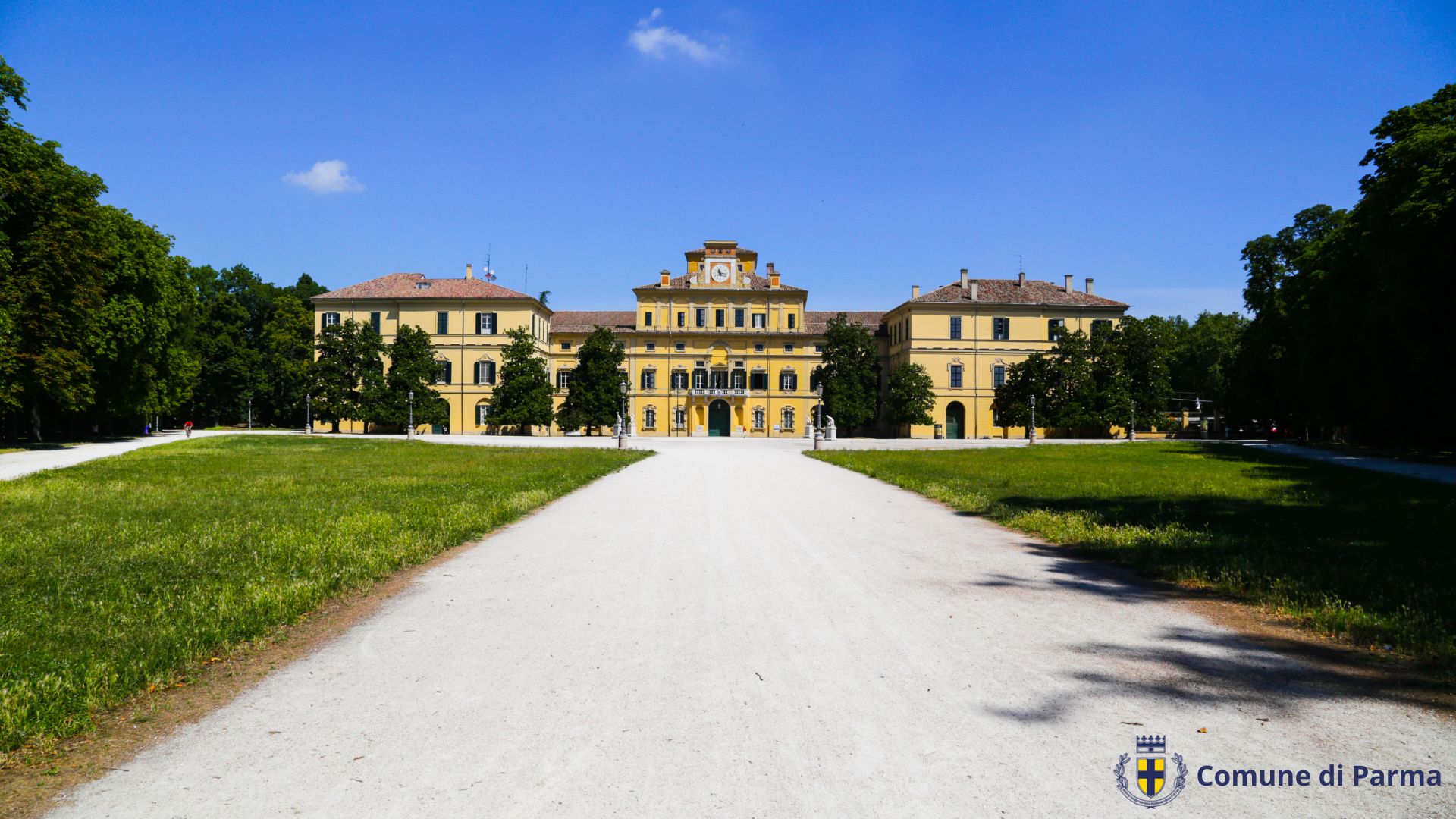
We are in the far north-east corner of the park, where the square highlights the Ducal Palace, a long building commissioned by Duke Ottavio Farnese in 1561 with two side wings protruding from the front and a façade that is only partially hidden by a dozen large, lush evergreen magnolia trees. The numerous frescoes that enrich the interior are the work of important artists who devoted themselves to them between the 16th and 17th centuries: Cesare Baglioni, Benigno Bossi and Jacopo Bertoia (who painted scenes from Orlando Furioso). In addition, Tiarini, Agostino Carracci and Gian Battista Trotti frescoed the Hall of Erminia, the Hall of Love and the Hall of Legends respectively. From here, we will continue westwards to the next stop.
Stage 2: Green Room 1 (Ducal Park north-east area, Parma).
It is the first of two Green Rooms, located symmetrically to the north and south. This space features a vase in the centre, designed by Petitot, on a pedestal and decorated with shells by sculptor Jean Baptiste Boudard. Near the green room in question are the lemon house greenhouse and the municipal gardening ponds, built in the early 1900s. Along with a few fruit trees, the copies of the statues of Venus and Apollo (1754-1755), located near the area, are particularly striking. The next step is to continue straight ahead, towards the west.
Stage 3: Horse Chestnut Room 1 (Ducal Park central-north area, Parma).
This first Green Room is followed by the first Horse Chestnut Room, which has a large vase with ram’s head handles in the centre of regular plantings of this particular tree species.
Stage 4: Theatre at Park (Ducal Park central-north area, Parma).
Opposite the Horse Chestnut Room, which we admired earlier, towards the northern perimeter avenue, stands the imposing structure of the Theatre at Park, a characteristic example of 1930s architecture, built in 1939 by Gino Robuschi to replace a section of ancient walls. It was originally designed as a pavilion for the Ente Fiere (Fair Organisation) and was later converted into a theatre. Today, the Theatre at Park is a multi-purpose venue that caters to all types of users through its programme of shows and cultural initiatives. The next stop on the itinerary is located near the theatre, continuing briefly westwards.
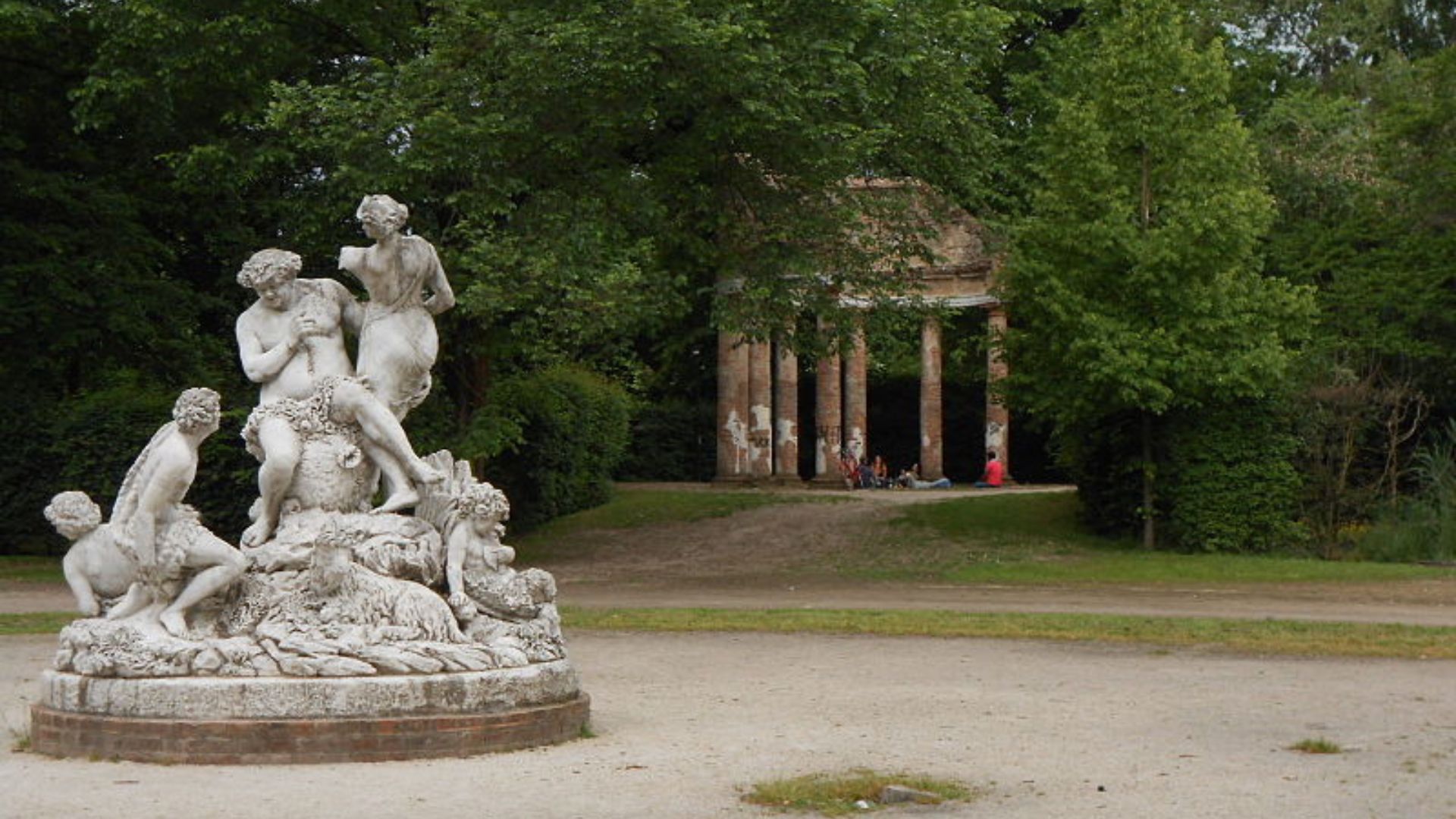
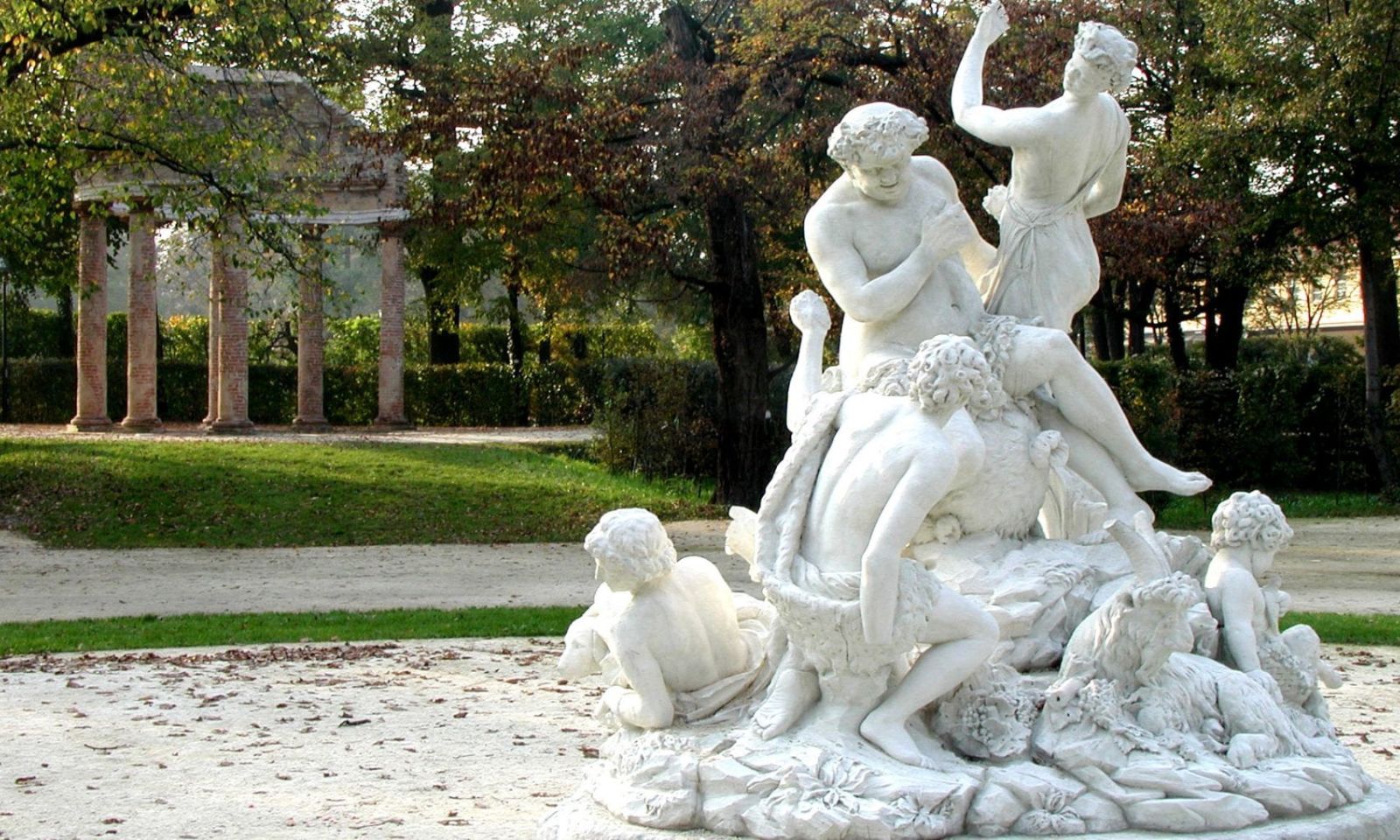
Stage 5: Silenus Group (Ducal Park north-west area, Parma).
The sculptural group of Silenus, sculpted by French architect Jean-Baptiste Boudard, includes statues of Silenus, Egle, Mnasilo and Cromie, created in 1766 in Carrara marble. In reality, the work of art was already completed in 1765, but it was inaugurated in 1769 with a performance called “Le pastorelle d’Arcadia” (The shepherdesses of Arcadia) staged at the statue on the occasion of the marriage between Ferdinand of Bourbon and Maria Amalia of Austria.
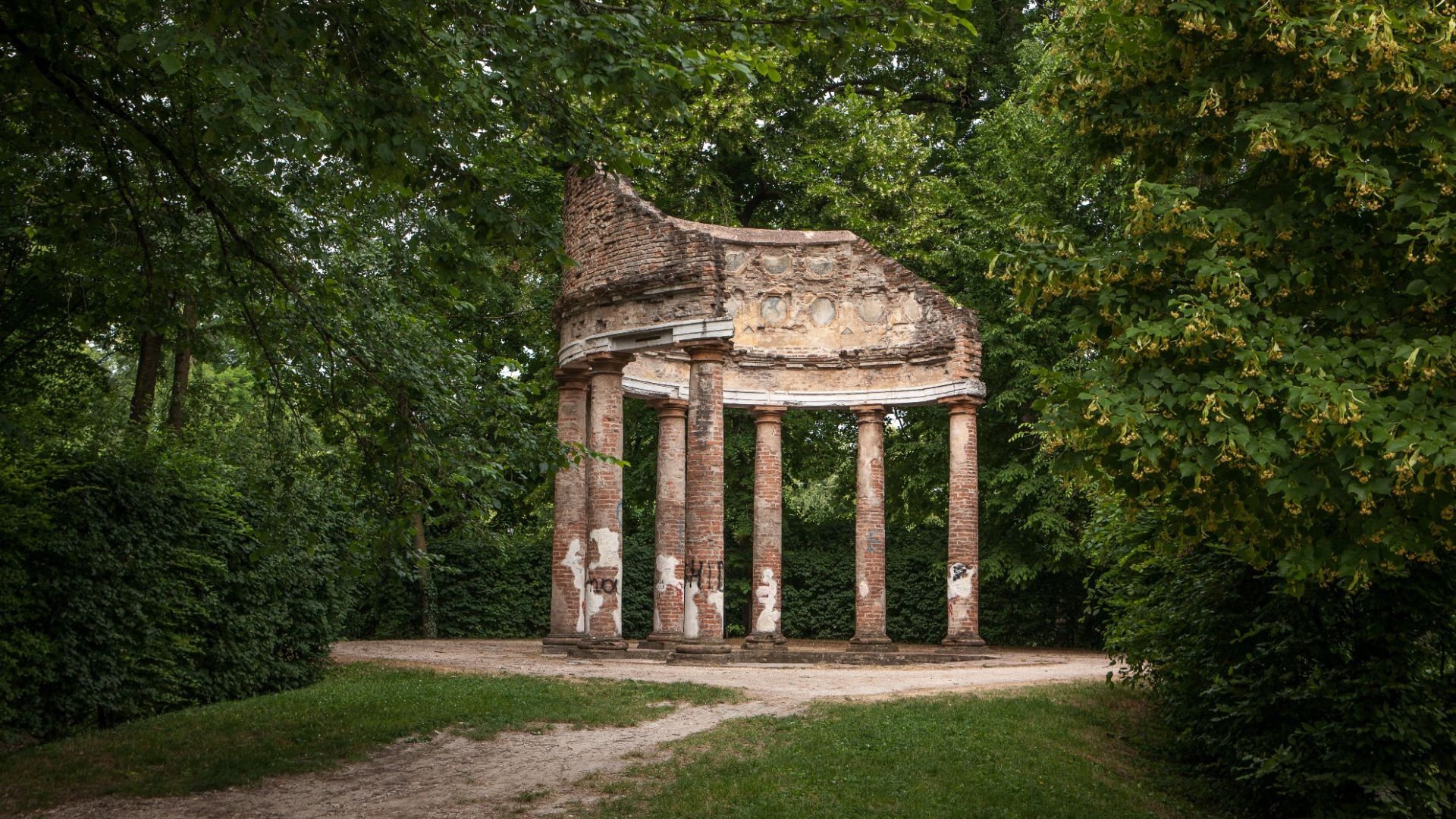
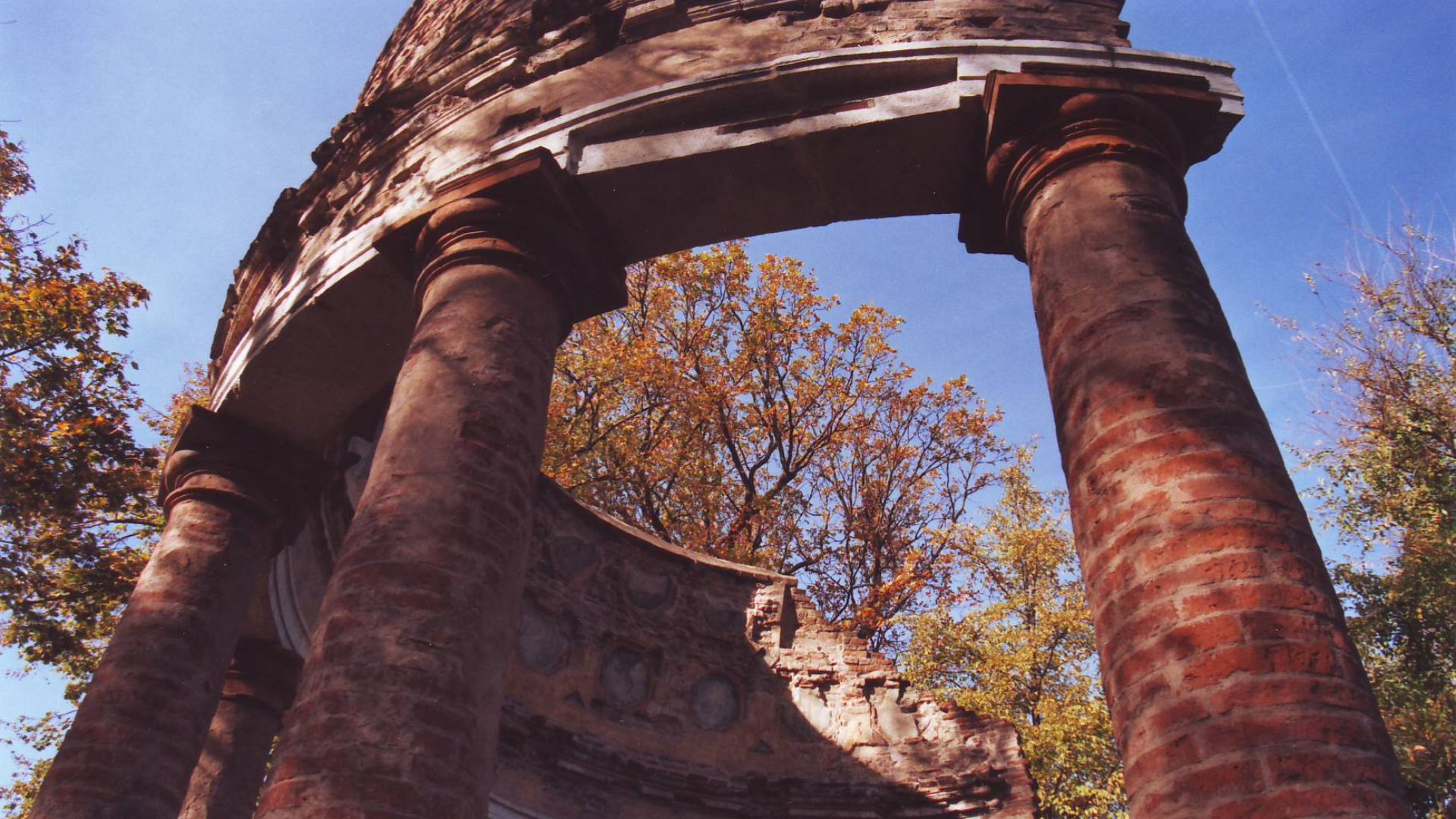
Stage 6: Temple of Arcadia (Ducal Park north-west area, Parma).
Nearby, you can see the next stop on the tour: a wonderful little temple in the form of a ruin. This work, the brainchild of the brilliant architect Ennemond Alexandre Petitot, was built in 1769 and was born from the desire to create a space that evoked bucolic and neoclassical aesthetics, enriching the park with a touch of elegance and charm. As with the previous stop, the temple was also marked by the wedding of Ferdinand of Bourbon and Maria Amalia of Austria, celebrated with a costume party where guests dressed up as shepherds and shepherdesses. From a botanical point of view, the hall is characterised by oak trees: numerous English oaks with beautiful bearing and powerful columnar trunks that branch out horizontally and shade the clearing in a circle.
Stage 7: Peschiera and Trianon Fountain (Ducal Park central-west area, Parma).
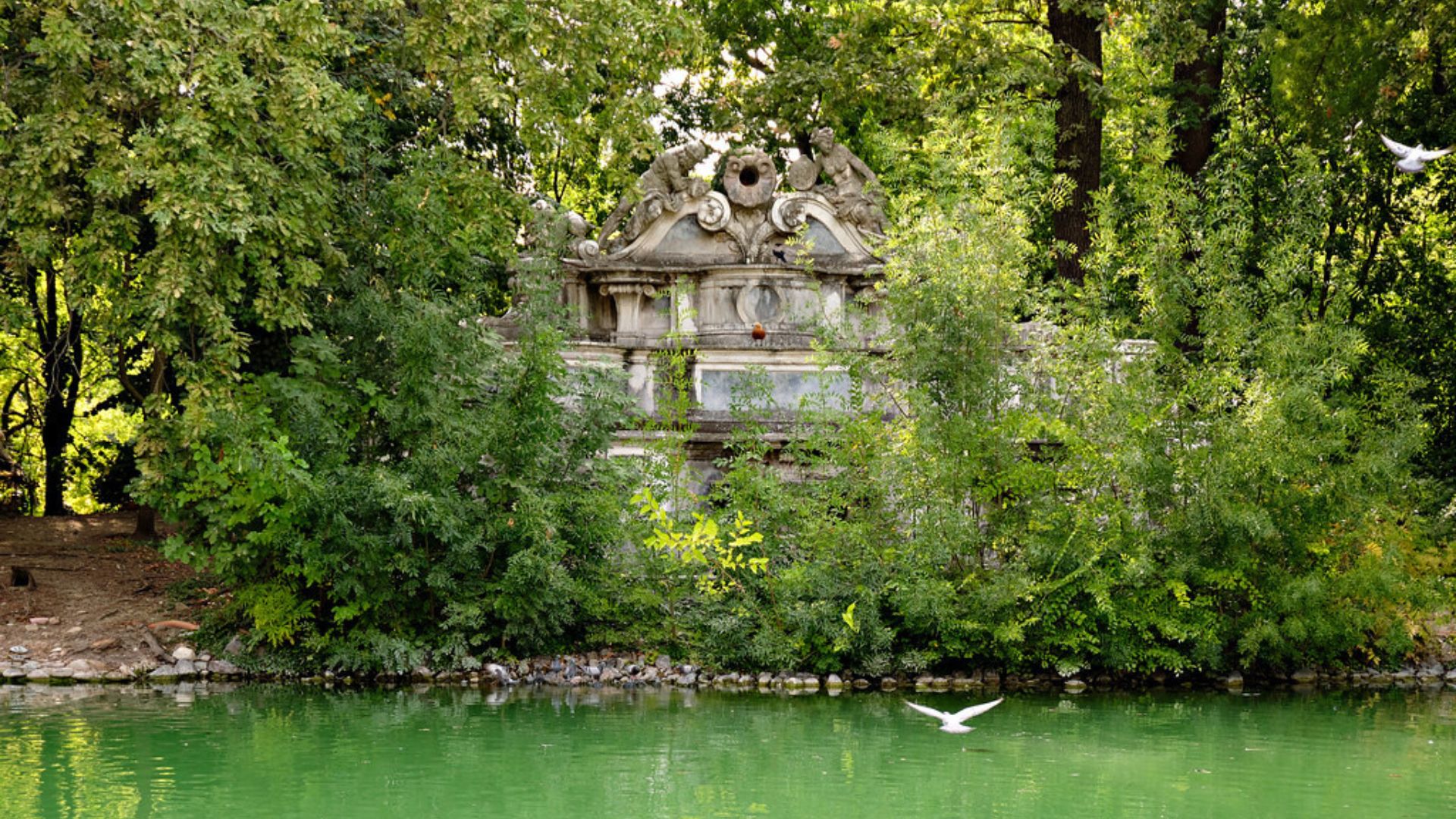
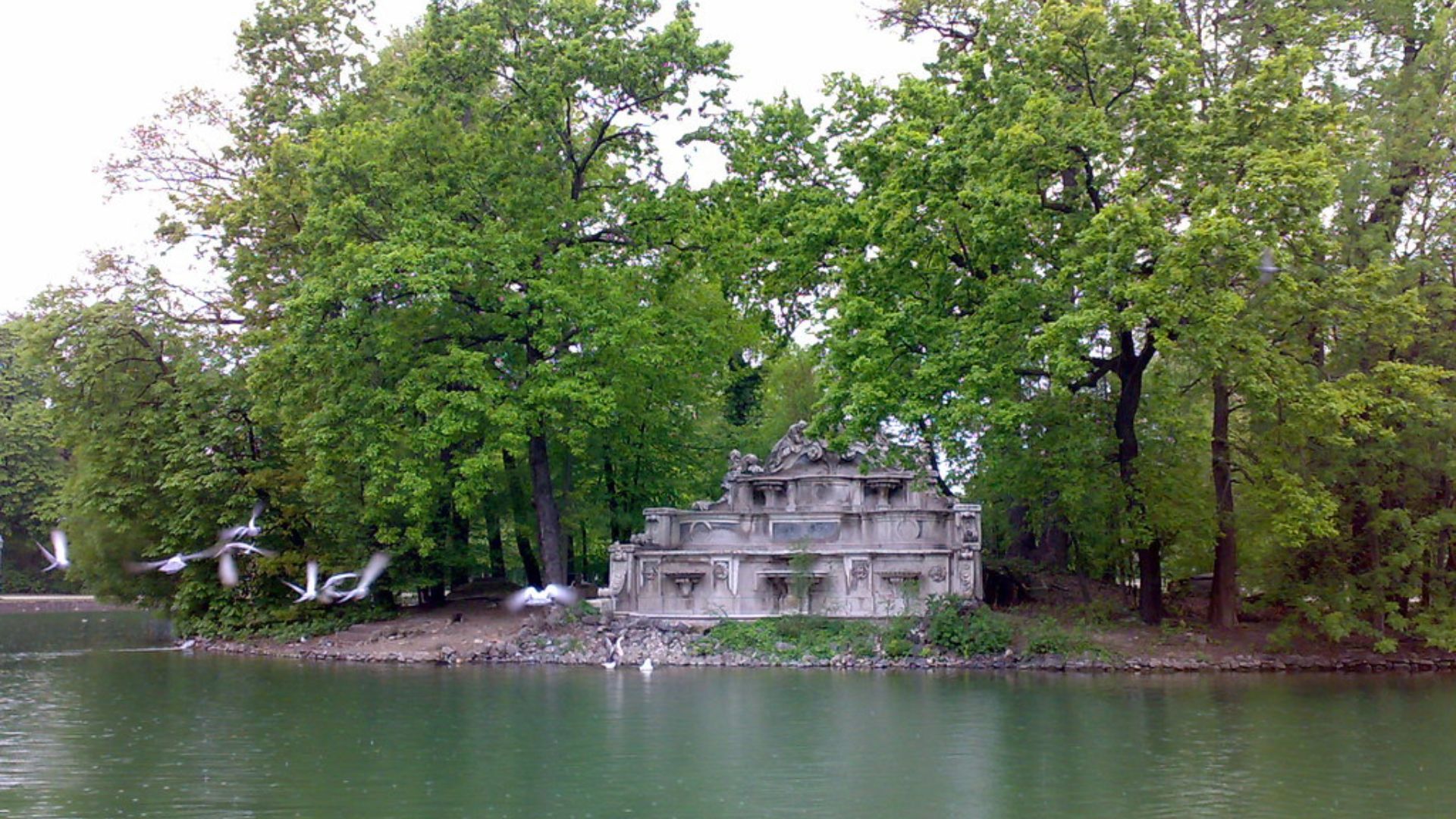
Opposite the Arcadia’s Grove, in the centre-west, you can admire yet another enchanting naturalistic view: the Peschiera and its Trianon Fountain. This aquatic attraction was dug in 1690, on the occasion of the wedding between Odoardo Farnese and Dorotea Sofia di Neuburg. In the centre is a small island, on which the 18th-century fountain was placed in 1920. It was created by Giuliano Mozzani for the garden of the Reggia di Colorno.
Stage 8: Monumental Gate (Ducal Park south-west area, Parma).
The entrance to the park in Piazzale Santa Croce, located at the south-western end, features the monumental gate designed by Petitot and later adorned with the monogram of Marie Louise. The next stop can be found by continuing eastwards.
Stage 9: Horse Chestnut Room 2 (Ducal Park central-south area, Parma).
Second exact reproduction of the previous Horse Chestnut Room, located symmetrically to the north.
Stage 10: Green Room 2 (Ducal Park south-east area, Parma).
Opposite the Horse Chestnut Room to the south, looking eastwards, you can enter the second Green Room, which also contains a vase in the centre, also made by Petitot and supported by a pedestal.
Stage 11: Eucherio Sanvitale Palace (Ducal Park south-east area, Parma).
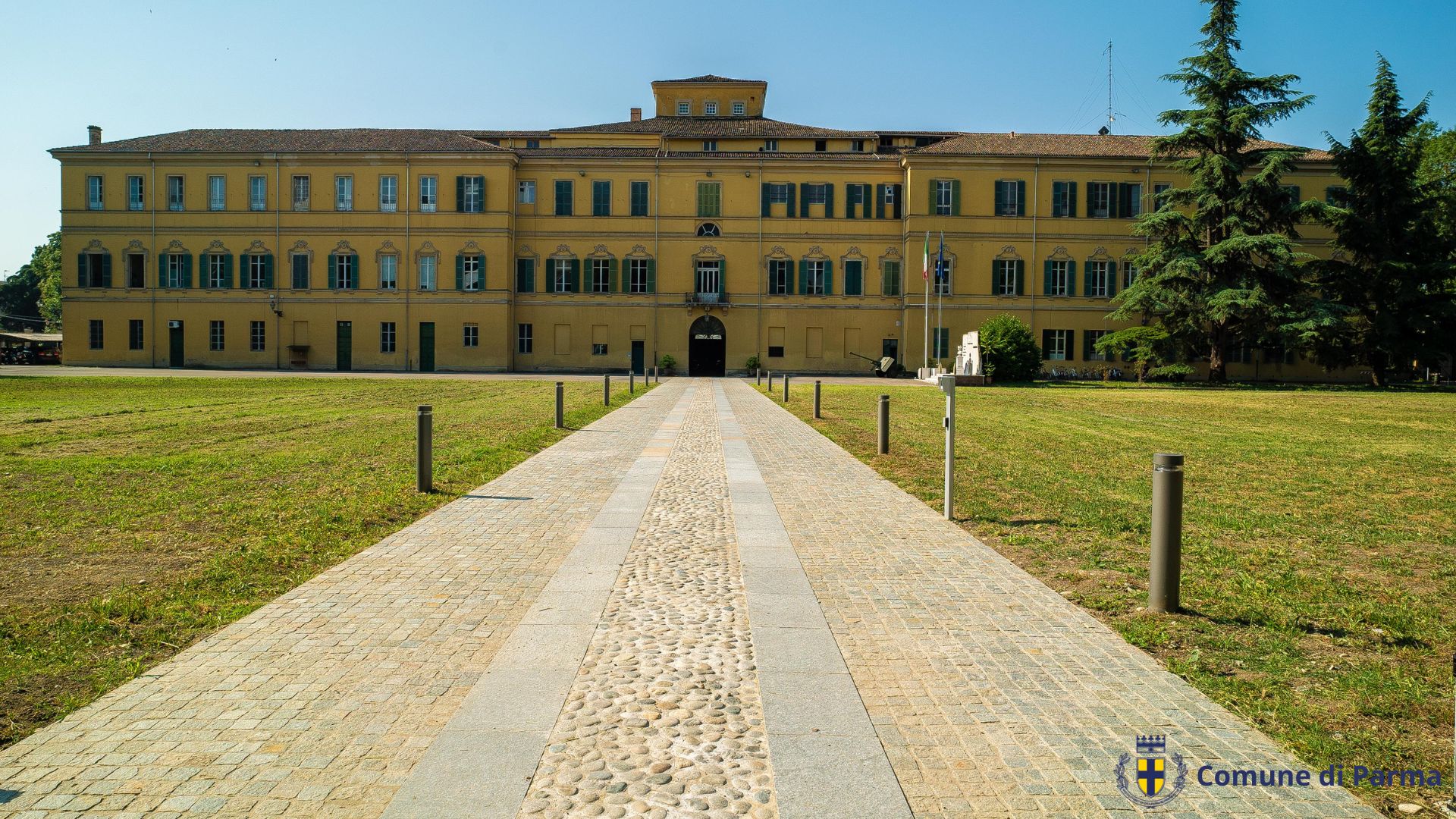
Walking along the southern perimeter avenue, shaded by a long row of lime trees, you slowly return towards the Étoile. But before reaching it, you come across the elegant Eucherio Sanvitale Palace, a jewel of Renaissance architecture characterised by two elegant loggias and four corner towers. Inside, it is decorated with landscape and religious frescoes and houses a museum, an exhibition space and a conference room.
Arrive: Orange Greenhouses (Ducal Park south-east area, Parma).
Near the Palace, beyond the avenue of lime trees to the south, is the last stop on the ducal route: the Orange Greenhouses, built in the 18th century to house citrus fruits. Today, the building houses a bar-restaurant with a pleasant internal courtyard. At the end of the visit, a little further on, you can return to the starting point at the Étoile, effectively concluding the route.
Useful tips: Comfortable shoes, a supply of water, layered clothing. For easier identification of the points along the route, consult the map of the Ducal Park shown in the images. Visitors are also advised to stop for lunch at the Corale Verdi’s Bistrot, in Vicolo Asdente 9, very close to the Ducal Park, which serves tasty typical Parmesan dishes. For further information and reservations, please call 3208648480 in advance (Website: https://bistrotcoraleverdi.eatbu.com/?lang=en).